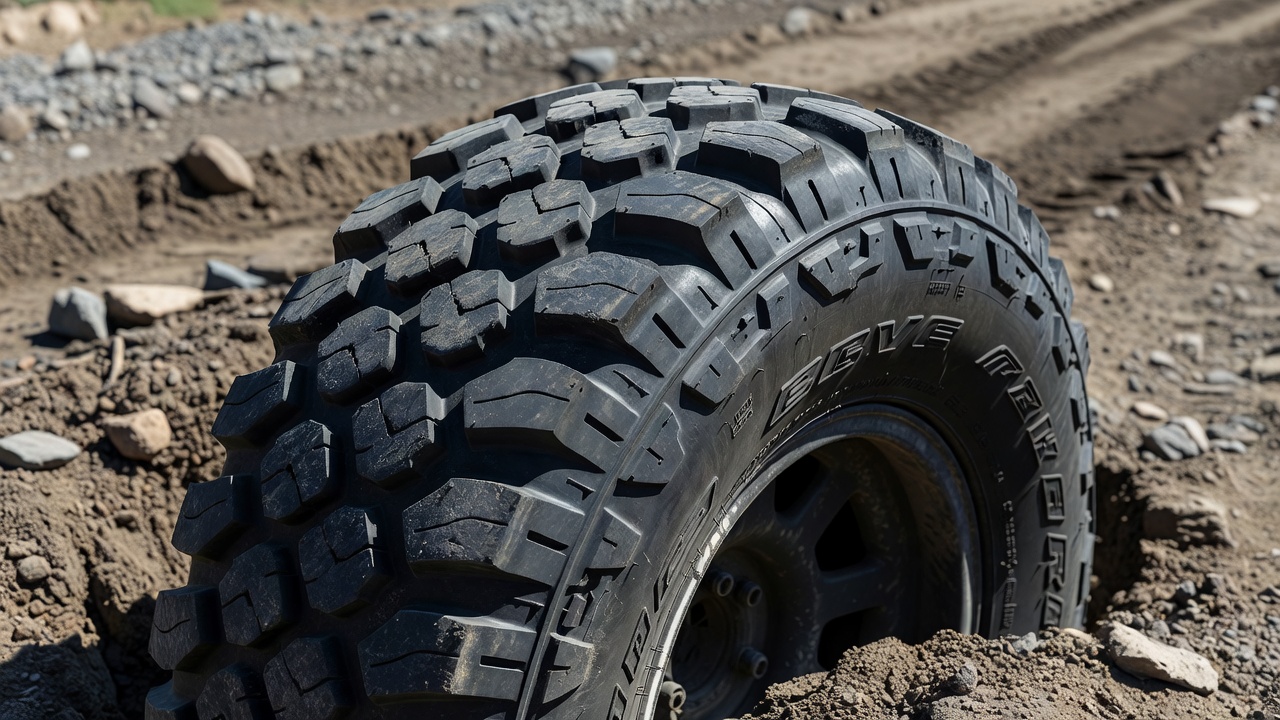
Describe the ground honestly
Start with the surfaces that dominate your actual journeys. A vehicle that spends most of its time on wet roads and gravel has different priorities from one transported to deep-mud events. Include braking, noise, fuel use and long-distance comfort in the decision. A tyre can look capable while being poorly matched to the work you need it to do.
Mud-oriented patterns often use more open tread to release soft material, while all-terrain designs make different compromises between road use, loose surfaces and wear. Neither label guarantees a particular result. Compound, tread depth, casing design and the specific product matter. Compare independent tests relevant to the same conditions instead of treating a category name as a complete specification.
Snow adds another distinction. The three-peak mountain snowflake marking indicates performance against a defined snow-traction requirement; it does not promise strong ice braking in every condition. The M+S marking is not equivalent to that tested snow designation. Check local seasonal requirements and the tyre maker’s documentation before relying on a sidewall symbol.
Construction must suit the load
Read the vehicle placard, approved fitment information and tyre specifications together. Load index, speed capability, rim compatibility and pressure limits need to be appropriate for the vehicle and its use. A light-truck construction may offer useful characteristics for some applications, but it can also add mass and stiffness. More plies or a stronger-sounding product name is not a universal improvement.
Use measured axle loads and the relevant manufacturer’s load-inflation guidance when assessing a modified vehicle. The maximum pressure moulded on a tyre is not automatically the correct operating pressure. Tyre capacity also does not increase the vehicle’s axle or gross weight limits. Seek qualified advice where an alternative size or construction changes the original specification.
Check wheel width, load rating, offset and compatibility with the tyre. Offset changes can alter steering behaviour and wheel-bearing loads, even when the assembly clears the body at rest. Include the spare in the plan: its dimensions, carrying arrangement and suitability matter when a puncture happens far from a workshop.
Diameter changes more than clearance
A larger rolling diameter can improve clearance beneath some axle components, but the increase is related to the change in radius, not the full diameter difference. Actual loaded dimensions vary between products. Clearance must also be checked at steering lock and throughout the approved suspension movement, with attention to hoses, liners, bodywork and braking components.
Larger tyres change effective gearing and can increase rotational inertia. That affects starting effort, braking demand and how the transmission behaves. Added tyre and wheel mass also changes the job of the suspension. Before buying, read the drivetrain gearing discussion and confirm any required speedometer correction, approval or inspection under local rules.
| Priority | What to compare | Do not overlook |
|---|---|---|
| Road and gravel touring | Wet braking, casing suitability, wear | Loaded pressures and spare compatibility |
| Soft mud | Tread clearing and relevant tests | Road manners and surface damage |
| Rocky access tracks | Casing design and controllability | Sidewall exposure and wheel damage |
Pressure is a controlled adjustment
Reducing pressure can change footprint and compliance off road, but there is no single safe pressure for every tyre, rim, load and speed. Too little pressure increases the risk of bead unseating, casing damage and heat build-up. Sharp impacts can damage a wheel even when a tyre appears to mould comfortably around smaller obstacles.
Follow the vehicle and tyre manufacturers’ guidance and obtain application-specific advice. Carry an accurate gauge and a suitable means of reinflation. Any off-road pressure adjustment requires a corresponding assessment of speed, load and operating conditions. Restore the appropriate road pressure before returning to road-speed travel; do not use a successful short trail section as proof of road suitability.
Inspect, record and replace deliberately
Inspect for cuts, exposed cords, bulges, embedded objects and uneven wear, including the inner sidewalls where accessible without unsafe access beneath the vehicle. Pressure loss, vibration or a new pull deserves investigation. Do not assume a sidewall injury is repairable; tyre repair limits depend on the damage and applicable professional standards.
Record pressures, loads, tyre age information and wear patterns so changes have context. Follow the tyre maker’s age and inspection advice rather than relying only on remaining tread. A puncture on the Canning Stock Route or a damaged casing near Moab becomes a planning problem as much as a tyre problem: suitable spares, communication and conservative route choices remain part of the build.